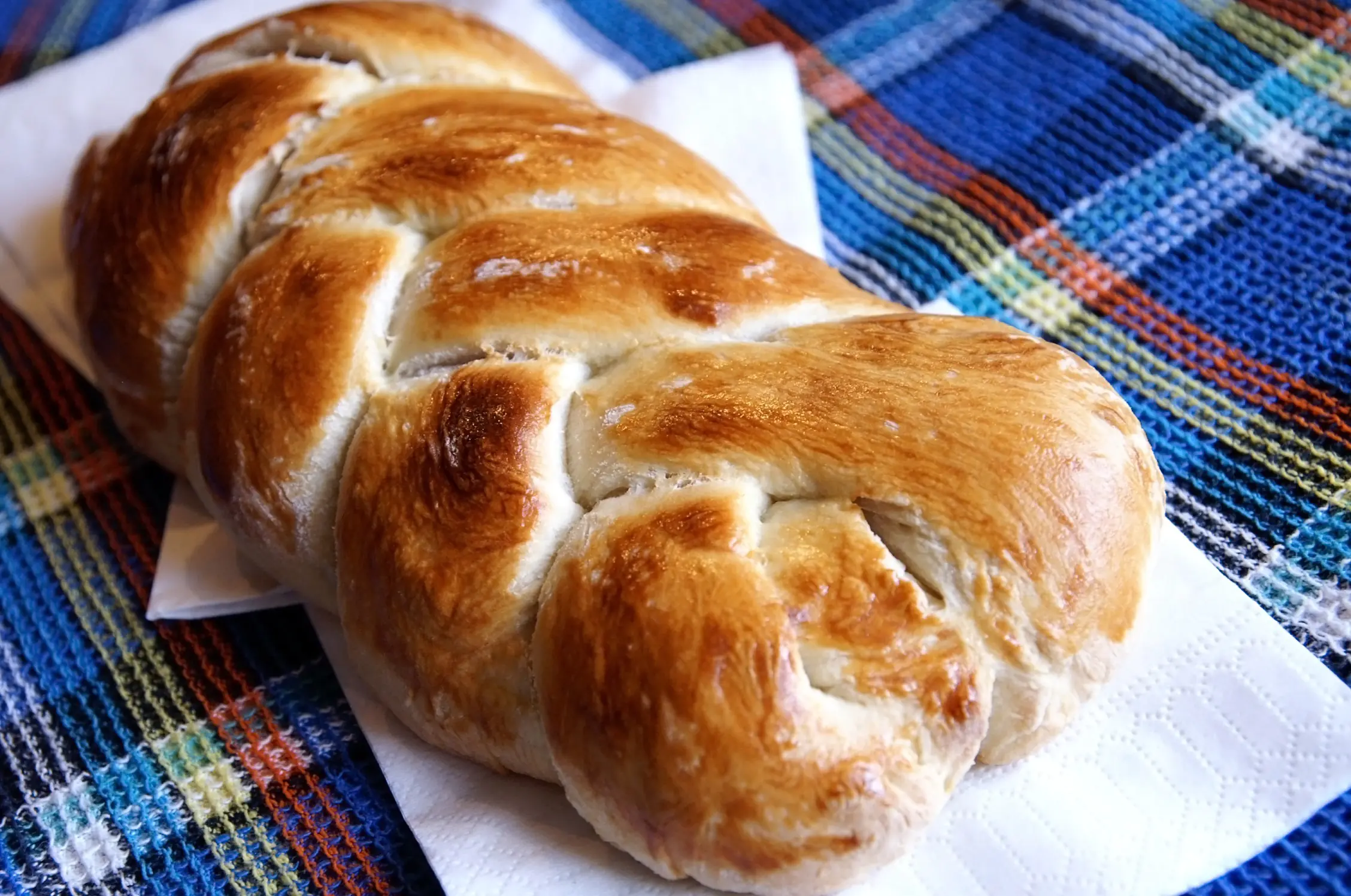
There’s something special about a beautiful loaf of challah bread sitting in the middle of the dinner table. With its deep golden crust, soft and light interior, and gently sweet flavor, this classic braided bread is as impressive to look at as it is delicious to eat. Traditionally served for Jewish holidays and the Sabbath, homemade challah is also wonderful for everyday meals, sandwiches, toast, and French toast.
This classic challah bread recipe uses a simple combination of flour, eggs, honey, vegetable oil, yeast, water, and salt. The eggs give the loaf its characteristic pale-golden color and rich flavor, while honey provides a subtle sweetness. The dough is soft and supple, making it particularly well suited for braiding.
A digital kitchen scale is a useful tool for making homemade challah because weighing the flour helps you get a consistent dough from one batch to the next. Bread dough is sensitive to the amount of flour you use, and measuring by weight can help prevent adding too much flour and ending up with a dense loaf.
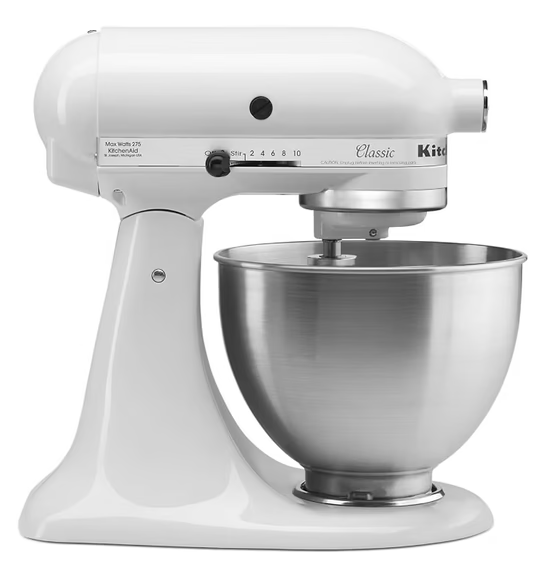
KitchenAid 4.5 Quart Tilt-Head Stand Mixer
10 Speeds, Durable Metal construction, 59 Touchpoints for Thorough Mixing, Compatible with all KitchenAid Attachments.
The traditional three-strand braid is a great place to start if you’re new to making challah, but you can also try a four- or six-strand braid once you’re comfortable working with the dough. After braiding, the loaf gets another rise before being brushed with an egg glaze and baked until deeply golden.
One of the best things about homemade challah bread is how versatile it is. Serve it warm alongside dinner, use leftovers for French toast, make grilled sandwiches, or simply toast a thick slice and spread it with butter.
If you’ve never made braided bread before, don’t let the beautiful finished loaf intimidate you. This classic challah recipe gives you a straightforward dough and plenty of room to practice your braiding skills while producing a loaf that’s worthy of a holiday table.
Not what you are looking for? Try these other bread recipes: English Muffin Bread, Cheesy Garlic Bread or homemade Ciabatta Bread.
Print
Challah Bread
- Total Time: 3:50
- Yield: 1 16″ Loaf 1x
Ingredients
Dough
- 1/2 cup (113g) water, lukewarm
- 6 tablespoons (74g) vegetable oil
- 1/4 cup (85g) honey
- 2 large eggs
- 4 cups (482g) Unbleached All-Purpose Flour
- 1 1/2 teaspoons (9g) salt
- 1 tablespoon instant yeast
Glaze
- 1 large egg, beaten with 1 tablespoon cold water
Instructions
- To make the dough: Weigh your flour; or measure it by gently spooning it into a cup, then sweeping off any excess.
- Combine all of the dough ingredients and mix and knead them, by hand, mixer, or bread machine, until you have a soft, smooth dough.
- Allow the dough to rise in a plastic wrap-covered bowl for about 2 hours, or until it’s puffy; it won’t necessarily double in bulk.
- Gently deflate the dough, and transfer it to a lightly greased work surface.
- Next step: divide the dough into pieces, the number depending on what kind of braid you want to make. You may braid the challah the traditional way, into a three-strand braid; To make a four-strand braid see “tips,” below.
- Once you’ve decided which braid you’re doing, divide the dough into the appropriate number of pieces. Roll each piece into a rope about 20″ long. If the dough starts to shrink back as you roll, cover it and let it rest for about 10 minutes, then resume rolling. The short rest gives the gluten a chance to relax.
- Braid the loaf. Remember, for three- or six-strand braids.
- Gently pick up the braided loaf, and place it on a lightly greased or parchment-lined baking sheet.
- Cover the loaf with lightly greased plastic wrap, and let it rise until it’s very puffy, 90 minutes to 2 hours at cool room temperature. Towards the end of the rising time, preheat the oven to 375°F.
- To make the glaze: Whisk together the egg and water. Brush the glaze over the risen loaf.
- Place the baking sheet atop another baking sheet; this will insulate the bread’s bottom crust, and keep it from browning too much. Put the challah in the lower third of the oven, and bake it for 20 minutes. If it’s a deep golden brown, tent it loosely with aluminum foil. If it’s not as brown as you like, check it again at 30 minutes.
- Once you’ve tented the challah, bake it for an additional 10 to 15 minutes, until the loaf looks and feels set and its interior registers at least 190°F.
- Remove the bread from the oven, and place it on a rack to cool.
- Store any leftover bread, well wrapped in plastic, at room temperature for several days; freeze for longer storage. While challah does tend to dry out after a day or so, it’s always good toasted, or made into grilled sandwiches or French toast.
Notes
Try this four-strand braid
- Divide the dough into four pieces, and shape each piece into a rough 6″ log. Cover the logs with lightly greased plastic wrap, and let rest for 10 minutes.
- Roll each log into a 15″ rope. Cover, and let rest for 10 minutes.
- Continue rolling the ropes until they’re about 20″ long; they’ll shrink back to about 18″ as they sit.
- Lay the strands parallel to one another, and pinch the ends on your left together.
- Take the rope nearest you, and move it up over the next two adjoining ropes.
- Next, move the rope back under the rope next to it. Fan the ends of the ropes out again.
- Repeat the process, but start with the rope farthest away from you. Bring it down and across the next two adjoining ropes, and then back under the rope nearest it.
- Continue in this fashion, alternating which side you begin with until you’ve braided the whole loaf.
- Pinch the loose ends together, and tuck them underneath the loaf.
- Prep Time: :20
- Cook Time: :30
- Category: Side
- Method: Oven